Robust
- Stable under load variations
- Insensitive to temporary limitation
- Consistent treatment results

From drinking water and process water to membranes, wastewater recycling, chemicals, auditing, analysis, swimming pools and disinfection: the water treatment work NEXT designs, supplies and supports in Qatar.
Choosing the right treatment
The right treatment depends on the raw water source, flow rate and effluent requirements, so it starts with analysing the incoming water. NEXT combines technologies into an integrated treatment system to suit your needs.
Start with water analysisNine offerings
Choose an offering to read it in full: what it covers, the technologies and systems involved, and how NEXT works with you.
Offering 1 of 9
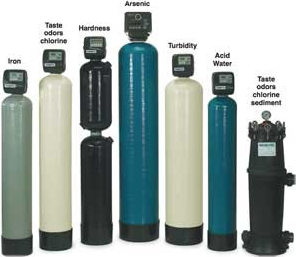
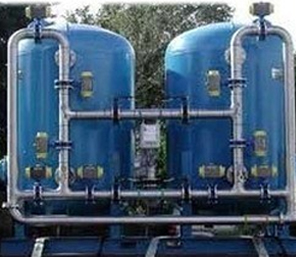
Water is the essence of life. We all depend on water for our survival, and we all have to take global responsibility for it. Today many municipalities are faced with growing concerns about the availability of usable water to meet the demand. Even in areas where water is plentiful, it must often be purified before it is usable for drinking.
NEXT offers you peace of mind by providing safe, reliable and cost-effective drinking water treatment programs geared for the needs of small communities and municipalities. We offer the broadest range of products, services, technology and equipment to solve all your drinking water issues, and the turnkey services that help you manage your process and manpower.
Offering 2 of 9
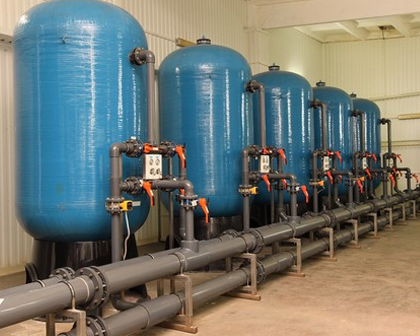
Process water refers to water used in manufacturing processes such as rinsing, plating, spraying, coating, cooling, washing, boiler water make-up, cooling tower make-up, etc.
Oftentimes, minerals dissolved in the city or well water may cause spotting, fouling, streaking, interference with adherence, scaling, product contamination or other undesirable effects which affect the quality of the product or the cost to manufacture it. Water quality may be associated with high energy costs; for example, demineralizing water going to a boiler may reduce fuel consumption markedly by allowing operation at much higher cycles of concentration, thus drastically reducing the blowdown which dumps very hot water down the drain.
NEXT offers a wide variety of process water treatment technologies. We will work with you in developing a custom water treatment solution to meet your needs and an ongoing service plan to totally maintain your system.
Offering 3 of 9
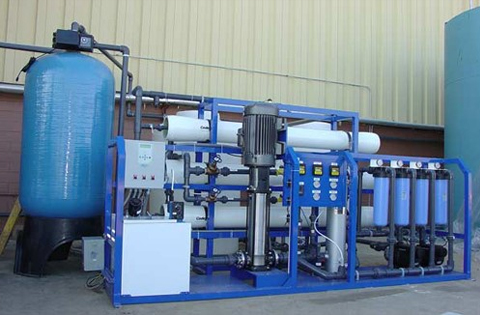
Reverse osmosis, or RO, is a water purification technology that utilizes a semi-permeable membrane to remove the dissolved ions and minerals from water to produce high purity water. An industrial reverse osmosis system is designed to be a part of an overall water purification system used in commercial and industrial applications.
In a reverse osmosis system, one side of the water purification tank has unprocessed water and pure water on the other side, separated by a semi-permeable membrane.
We would apply pressure to the untreated side of the tank, enough to counteract the natural osmotic pressure from the pure water side and then to push the untreated water through the membrane, thus adding fresh water to the water side, and leaving the unpurified remains on the other.
We design, install and service reverse osmosis systems, and assist companies in a wide range of industries and applications to realise optimal water purification through reverse osmosis.
The water source for the RO system.
Can be made up of several filters, usually one for solids and sediment removal and additional filters using activated carbon for additional impurity removal.
A CTA (cellulose tri-acetate), which is chlorine tolerant, and the TFC/TFM (thin film composite/material), which is not chlorine tolerant, are the heart of the system. The unit holds layers of membranes and allows for a large surface area for the water to move over. The layers, which look like plastic wrap, trap impurities and allow the water to exit the system in a purified state.
After the reverse osmosis process, the water may be run through an activated carbon filter to remove any additional impurities or odor.
To conserve water, the RO system has an automatic shut-off valve. When the storage tank is full (this may vary based upon the incoming water pressure) this valve stops any further water from entering the membrane, thereby stopping water production. By shutting off the flow this valve also stops water from flowing to the drain.
A check valve prevents the backward flow of product water from the RO storage tank.
This device maintains the flow rate required to obtain the highest purity water (based on the gallon capacity of the membrane). It also helps maintain pressure on the inlet side of the membrane.
This line runs from the outlet end of the reverse osmosis membrane housing to the drain. This line is used to dispose of the impurities and contaminants found in the incoming water source.
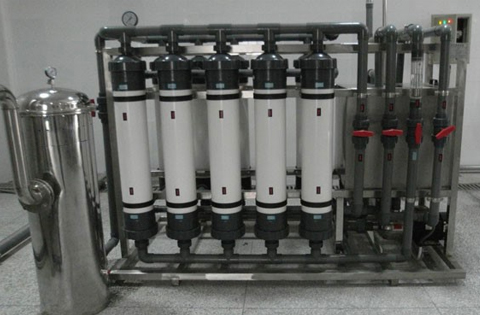
Ultrafiltration is used for the separation of suspended solids, colloids, bacteria and viruses. This technique uses membranes with pore sizes between 1 and 100 nm.
NEXT's engineers design and build tailor-made ultrafiltration plants. Our UF plants are built with hollow fiber outside-in membranes, up to 100 m³/h, to purify surface or groundwater from suspended solids, colloids and all kinds of micro-organisms such as bacteria, viruses, protozoa, germs and larvae.
Ultrafiltration is also commonly used as a reverse osmosis plant pretreatment.
This design tries to maximize surface area in a minimum amount of space. It is less expensive but more sensitive to pollution due to its manufacturing process. It consists of consecutive layers of large membrane and support material in an envelope-type design rolled up around a perforated steel tube.
It is normally used for bad quality water. They are set up with a stack of membranes and support plates.
Generally used for viscous or bad quality fluids. These modules do not need a preliminary pre-treatment of the water. As the feed solution flows through the membrane core, the permeate passes through the membrane and is collected in the tubular housing.
The main drawback is that the system is not very compact and has a high cost per m² installed. Tube diameter is generally between 4 and 25 mm.
The modules contain several small (0.6 to 2 mm diameter) tubes or fibers. As the feed solution flows through the open cores of the fibers, the permeate is collected in the cartridge area surrounding the fibers. It can carry out the filtration in two ways, either "inside-out" or "outside-in".
Offering 4 of 9
NEXT designs and sets up wastewater treatment plants and also upgrades existing treatment facilities. The company offers consultancy services to its valued customers.
As a part of its consultancy service, we carry out preliminary studies and surveys, get to know the client's requirements, problems, constraints etc., and based on this data we draw our conclusions and provide superior services. We offer many modern and customised technologies like:
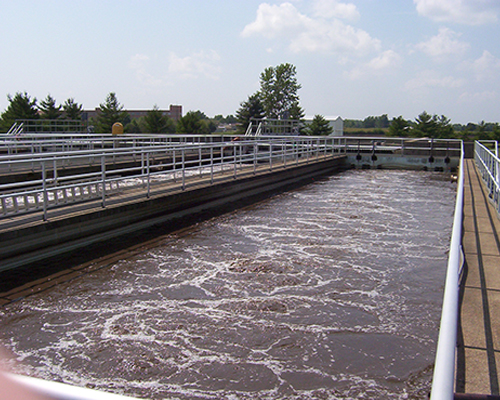
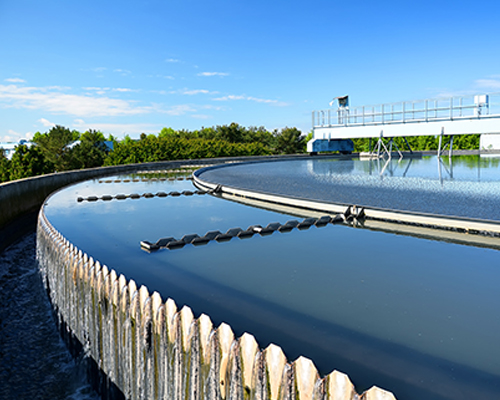
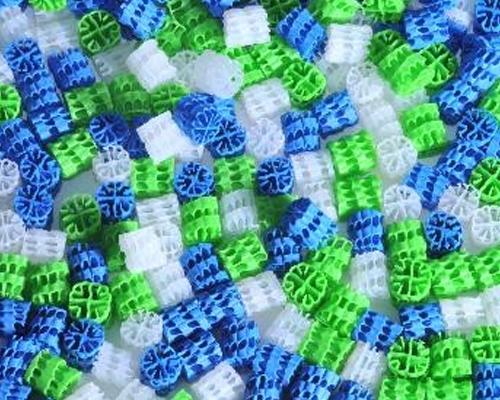
The Moving Bed Biofilm Reactor or MBBR process is based on the aerobic biofilm principle and utilizes the advantages of activated sludge and other biofilm systems without being restrained by their disadvantages. The basis of the process is the biofilm carrier elements that are made from polyethylene. The elements provide a large protected surface area for the biofilm and optimal conditions for the bacteria culture to grow and thrive.
The biofilm that is created around each carrier element protects the bacterial cultures from operating excursions to yield a very robust system for those industrial facilities loaded with process fluctuations. The biofilm also provides a more stable "home" for the bacteria to grow, so there is less space required compared to other biological systems and far fewer controls.
Essentially, nutrient levels and DO levels are the only control points for the system. MBBRs can be designed for new facilities to remove BOD/COD from wastewater streams or for nitrogen removal. Existing activated sludge plants can be upgraded to achieve nitrogen and phosphorus removal or higher BOD/COD capacity.
Offering 5 of 9
NEXT offers an extensive range of advanced, scientifically formulated water treatment products, speciality chemicals and water additives manufactured to the highest international quality and environmental standards for guaranteed performance.
NEXT's high performance chemical treatment products and speciality additives are used successfully in commercial, municipal and industrial process environments where they help to improve productivity, optimise performance and reduce equipment life-cycle costs.
NEXT's full range of scientifically formulated water additives and chemical treatment products includes high performance water treatment chemicals for steam boilers, cooling water systems, cooling towers and closed circuits; wastewater and effluent treatment chemicals, high performance industrial chemicals, reverse osmosis membrane products, eco-friendly biological formulations, advanced polymers and much more.
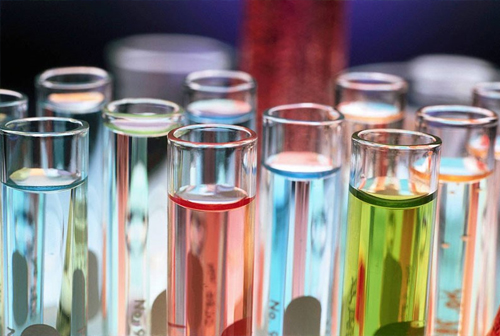
For the chemical treatment of water a great variety of chemicals can be applied. Below, the different types of water treatment chemicals are summed up.
Offering 6 of 9
A water audit can provide organisations with strategies on how to reduce costs and improve water use efficiency. NEXT's experienced water auditors can assist your organisation to improve water use through comprehensive water audits.
Offering 7 of 9
NEXT provides water testing services for water quality. Water quality analysis is provided for the world's petroleum, mineral, food, industrial, manufacturing and other industries.
Our water analysis also informs the choice of domestic water treatment technology.
Offering 8 of 9
NEXT offers the leisure, public and private sectors a high quality, first-class service, specialising in all aspects of swimming pool design, construction, maintenance, project management and finishing.
Having wide experience in the civil and mechanical engineering disciplines, and a highly skilled, fully qualified engineering and construction team, our work is carried out to the highest standards and complies with the latest legislation, codes of practice and health and safety regulations.
From pool design through project management services to complete build and refurbishment, we work closely with our clients, ensuring that they are kept up to date at every stage of the project until completion.
We pride ourselves on the high standards of workmanship that we adhere to, and we operate a process of continual evaluation to ensure that as a company we offer the highest standards available.
We are confident our customers can have total peace of mind that projects we undertake will be of the highest quality, delivered on budget and on time.
We have the professionalism, the expertise and the technical knowledge to provide the complete swimming pool service.
Offering 9 of 9
Every new water service, cistern, distributing pipe, hot water cylinder or similar appliance, and any modification to these services, should be thoroughly flushed with drinking water before being used.
Where the piping system is not used immediately after commissioning, and has not been flushed at regular intervals (of up to 30 days, depending on the characteristics of the water), it must be disinfected before use.
Note 1 ppm is equivalent to 1 mg/l.
Furthermore, cleaning and disinfection of water systems on a scheduled routine basis is good engineering practice. It is a statutory requirement to disinfect water systems in premises where water is stored and used in a way that could create the foreseeable risk of legionellosis (Legionnaires' disease).
Contact us to avail of or know more about these services. Our engineers will work with you, and visit your site or office for meetings, to specify the optimum solution and offer advice on our services, providing you with a cost-effective and efficient solution.
Authorised dealer in Qatar
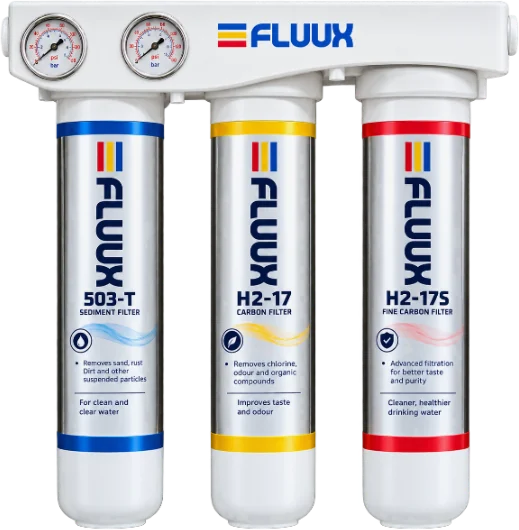
Next Water Solutions is the authorised dealer for Microfilter Korea water purifiers in Qatar.
FLUUX, Microfilter's commercial filtration brand, protects coffee machines, ice machines, combi ovens and beverage equipment in restaurants, cafés, hotels, convenience stores and QSR chains.
Our engineers will work with you to specify the optimum solution for your site.
Contact us
Want to say hello? Want to know more about us? Give us a call or drop us an email and we will get back to you as soon as we can.
All fields are required except phone.